

AlSourayia Flooring & Furnishings
How to care for SPC flooring correctly
Explore page content through imagery and options directly related to this section.
ExploreExplore page content through imagery and options directly related to this section.
ExploreExplore materials, colours and patterns, compare the options and review samples before making your final choice.
The collections below come directly from the real WooCommerce categories and products inside this family.
Practical factors that help you reach the most suitable product.
Define the space and level of use before choosing the material.
Choose a durability rating suited to expected daily traffic.
Review the colour on site because lighting changes its appearance.
Compare straight and geometric patterns according to the room dimensions.
The questions most relevant to material, use, installation and maintenance.
SPC and LVT are usually the most suitable choices for kitchens because of their high moisture resistance and ease of cleaning.
Parquet offers a warmer look and greater comfort underfoot, often lower maintenance costs, and easier removal and installation for some click systems. Certain types also offer resistance to bacteria and stains depending on the product.
Wipe the floor with a lightly damp cloth without pouring water directly onto it, and avoid harsh chemicals to preserve the protective layer.
Some types such as HDF, SPC and many LVT products use click installation and do not require glue, while some LVT products require adhesive installation according to their specifications.
Yes. Click-system floors, especially SPC and some HDF products, can be dismantled and reinstalled if the planks remain in good condition.
It is suitable for most rooms in the home and some commercial spaces. Wooden parquet is best avoided in areas exposed to a lot of water, such as bathrooms and kitchens. SPC and LVT are more suitable for moisture, while the installation method should still prevent water from reaching beneath the flooring.
HDF, SPC and LVT are usually among the most requested options because they balance appearance, durability, ease of use and maintenance.
Possible causes include an uneven subfloor, missing or unsuitable underlay, or small gaps. Correct installation with suitable insulation greatly reduces noise.
Parquet, particularly HDF, is usually based on wood fibres, while vinyl planks such as SPC and LVT are based on PVC or stone-plastic composites depending on the type and generally offer greater moisture resistance.
Pouring water is not recommended. Use a lightly damp cloth even with water-resistant types to protect the floor and prevent water from entering the joints.
They vary by type. Wooden parquet can be affected by prolonged water exposure, and some types require precise installation and suitable insulation. Choosing the correct thickness and quality reduces potential problems.
Clean with a lightly damp mop, avoid harsh cleaners, remove dust to prevent scratches, do not drag furniture, and do not leave spilled water standing, especially on wooden parquet.
Terminology varies between manufacturers. In general, products described as waterproof use treatments that reduce water absorption and seal fibre pores, while water-resistant products tolerate moisture for a limited period and still require correct use.
It is generally not recommended because water may reach beneath the floor, especially with click installation. If necessary, use solutions specifically designed for bathrooms with a suitable installation method.
Yes. Products made with safe and environmentally responsible materials are available according to product specifications. We recommend choosing certified products.
Parquet can be installed in almost any area, including small rooms, provided the subfloor is level and properly prepared.
A lightly damp cloth is usually sufficient. Avoid strong chemicals. The protective layer helps resist stains.
Yes, provided the surface is level and the tiles are firmly fixed without breaks or voids.
No. Use cleaners specifically intended for parquet, or light water-based cleaning according to the product care instructions.
Yes. Dust can affect installation stability and may cause scratches through friction over time.
Some people can install simple systems, but cutting corners and edges and fitting accessories require experience and tools. A professional installer is recommended for the best result.
With click systems, damaged parts can often be replaced relatively easily by dismantling the affected section and installing replacement pieces.
Skirting covers the expansion gap along the perimeter, usually around 1 cm, protects the edges and gives the installation a finished appearance.
They are used at entrances and doorways to cover joints, protect edges, keep dust out and improve the final appearance.
Yes. Warranty coverage is available, for example five years on some products, depending on the product type and warranty terms.
Yes. A suitable underlay is recommended to improve insulation, reduce sound and help stabilise the flooring.
Request a free visit to review samples under your actual lighting and take initial measurements.
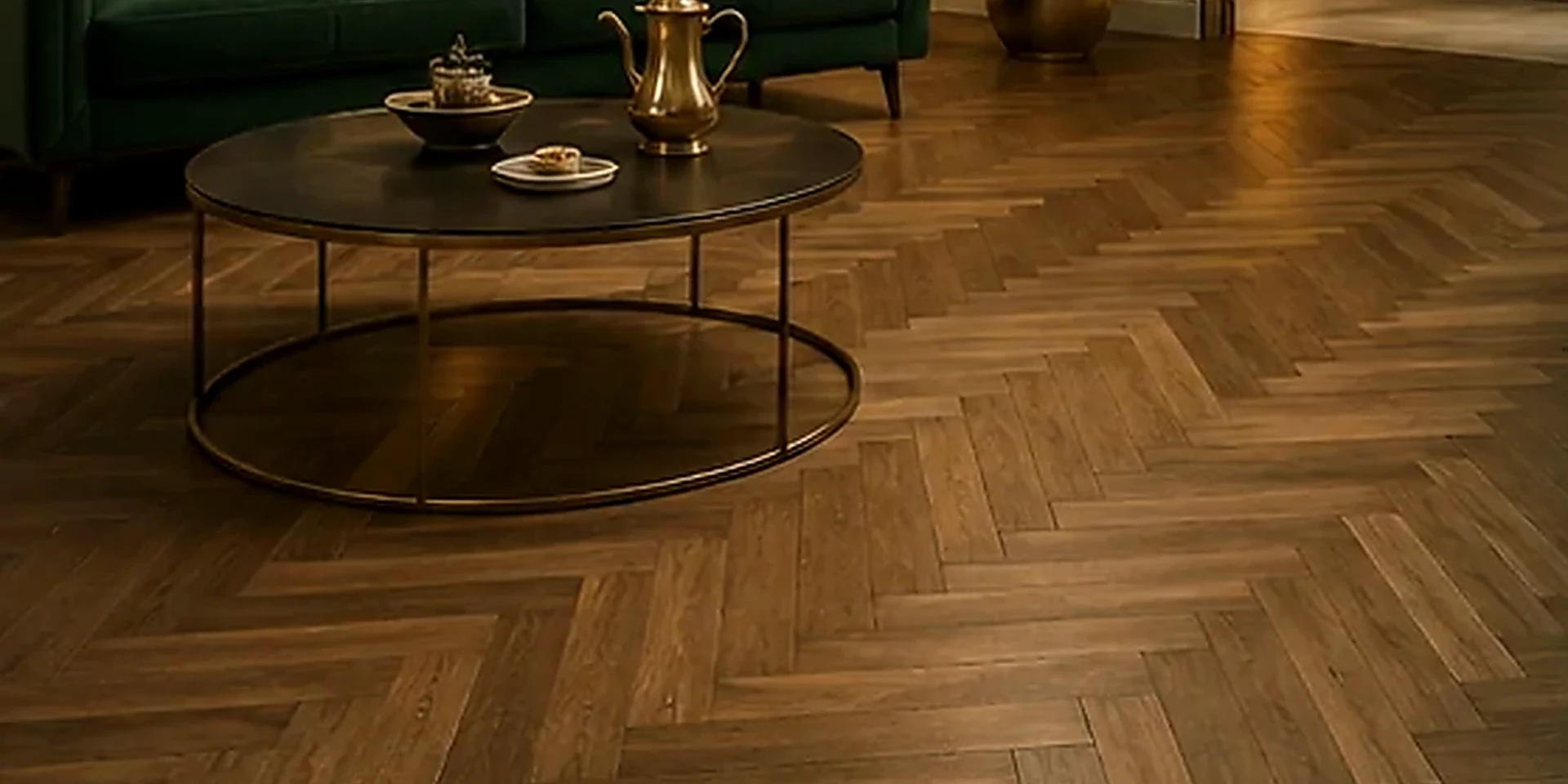

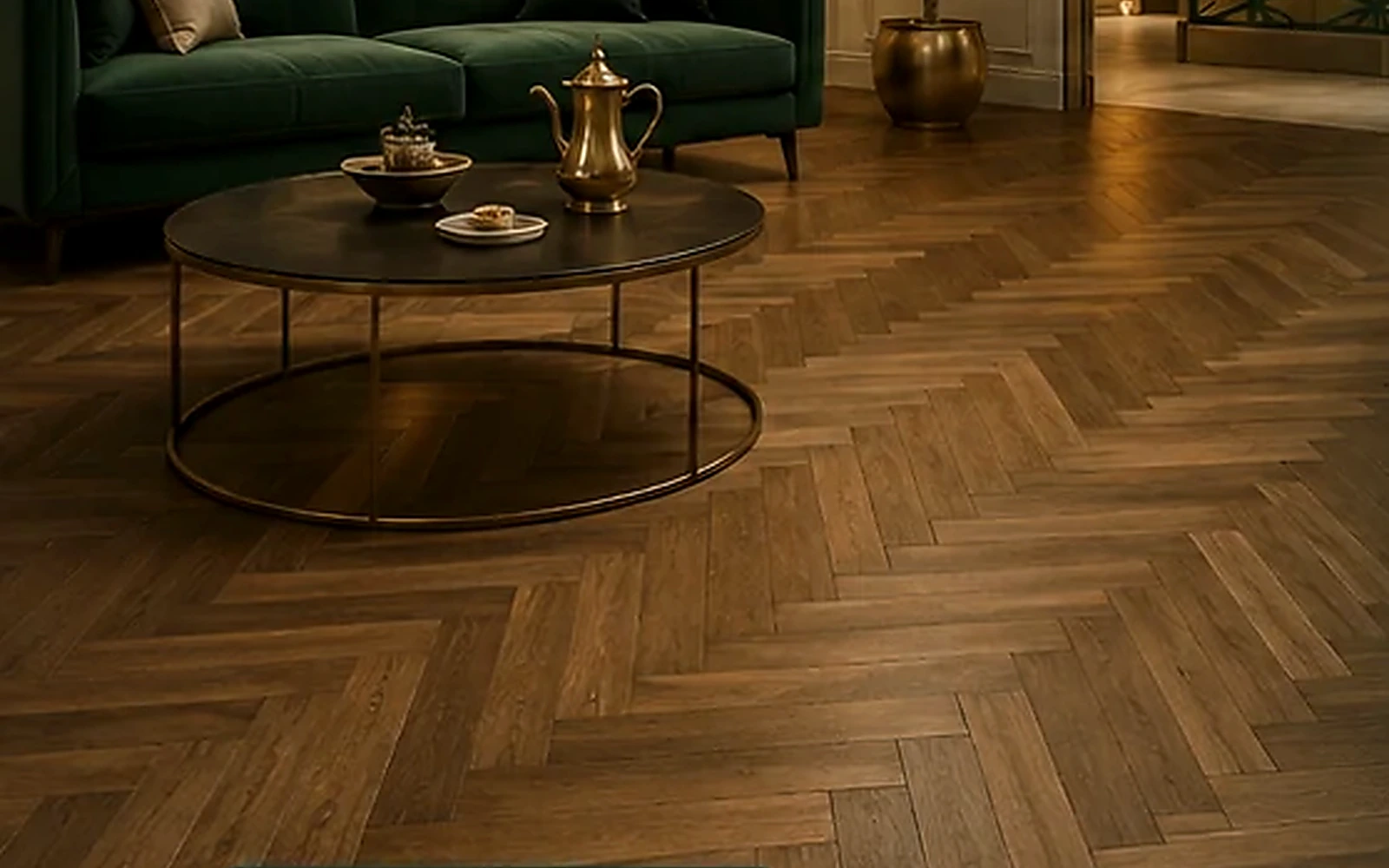 Parquet جنت